Why 6-Volt Systems Worked Better Than People Assume
I gained a lot of experience with old 6-volt Ford electrical systems, and I learned that they can work very well when maintained correctly. My own quarter-stroker ’49 Oldsmobile ran flawlessly on its 6-volt generator, even though those engines were known for hard starts. Heavy “tractor cables,” cast-brass soldered connectors, and a large tractor battery helped compensate for voltage drop, especially when a 12-volt conversion wasn’t yet practical.
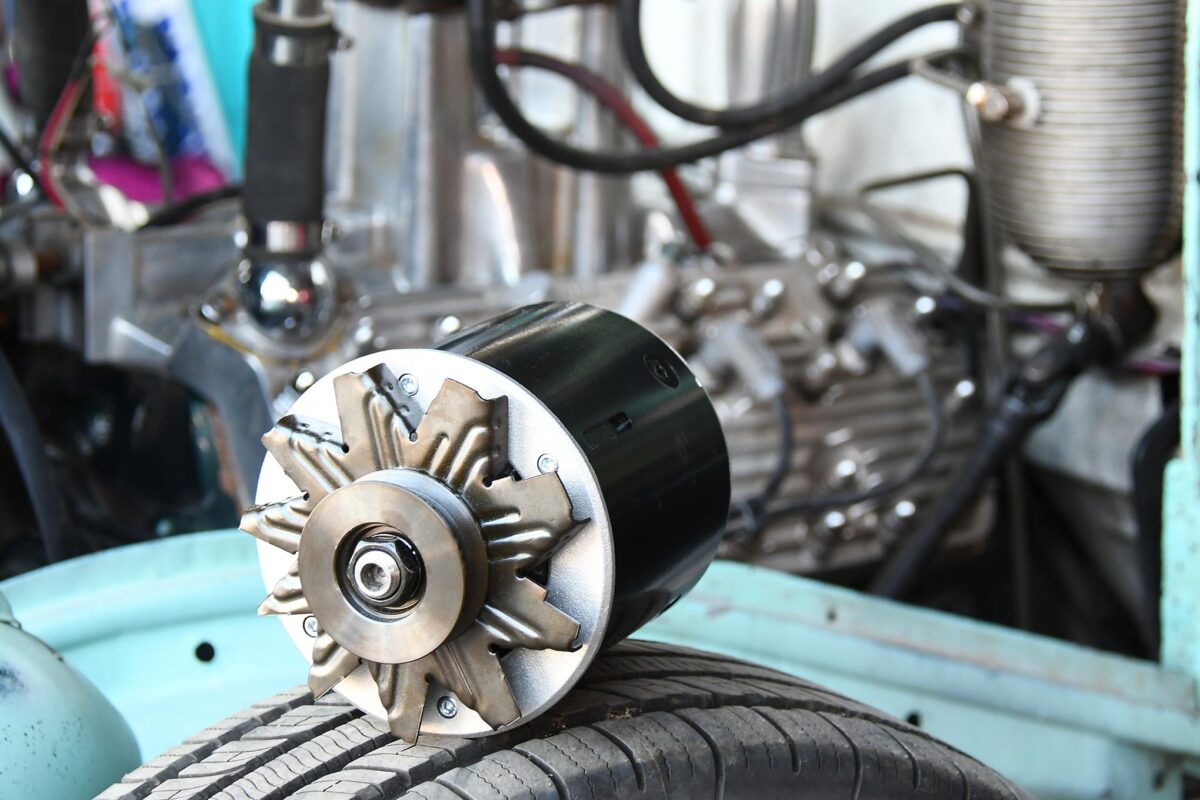
Over time, a 12-volt charging system became necessary for many owners. In most cases, changing the regulator was the biggest step. The 6-volt generator rarely produced full output, so the current regulator could be adjusted to protect it if needed. Many builders used a simple trick on three-brush generators: set the third brush for full output, then set the current regulator to limit maximum amperage. That method allowed quick battery recovery without switching to a two-brush generator. Today, it is far easier to install a self-regulated alternator.
Common Causes of Voltage Drop in Old Fords
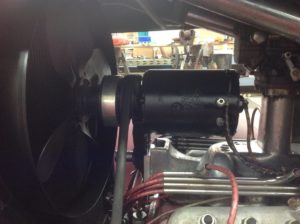
Voltage loss from dirty connectors and poor grounds often creates charging problems. This issue explains why modern alternators use internal regulators. Most early Fords came with a ground strap between the engine and frame, but many owners removed it during repairs. Even if the strap remains, the voltage regulator still requires a clean, direct ground from the generator frame to the regulator frame. It must sense the exact voltage, not “something close.”
The regulator also depends on accurate battery voltage. The main charging wire must be large enough to handle full current and have clean connections. Alternator wiring tends to overheat when loose, but generator wiring usually causes the opposite problem—a battery that never charges.
Positive Ground vs. Negative Ground Systems
Ford used internal-ground fields, while GM used external-ground fields. Either generator can run on positive or negative ground as long as the regulator matches the system polarity and field-ground style. This rule applies to both 6-volt and 12-volt systems.
Regulators were available in multiple configurations. Delco produced both internal- and external-ground styles, which often confuses owners into thinking the generator itself must be GM. Commercial vehicles were also positive ground at one time, so many combinations existed. In fact, a single generator might accept four different regulators, even if it remained a 6-volt unit. Because of this flexibility, switching to an alternator can sometimes be the simplest choice.
A voltmeter remains one of the best diagnostic tools for verifying polarity, output, and regulator function.
Understanding Ford Ammeters and Why Wiring Matters
Some Ford ammeters used a metal loop that the insulated wire passed through. This “loop style” does not care about voltage, but reversing polarity will cause the gauge to read backwards. You can correct the reading by running the wire through the loop in the opposite direction. It is critical to inspect the insulation near this loop, because the metal can cut through the wire and create a dangerous short. That wire can get red-hot in seconds.
Two-post ammeters are easier to manage. You simply move the wires from one terminal to the other to correct polarity. Ford’s old circuit breakers, on the other hand, often fail with age and shut the lights off without warning. A fuse block is a better option, although even a fuse cannot always stop a loom-melting short. Like a fire extinguisher, it usually fails to be in the “right place” at the right moment.
Gauges, Coils, and Resistors in 6-Volt and 12-Volt Conversions
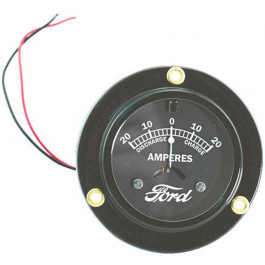
Ford gauge designs vary so widely that there is no single wiring rule. Changing polarity or converting to 12 volts must be handled on a case-by-case basis. The same applies to ignition resistors. The coil manufacturer sets the requirements. For example, Mallory produced countless ignition systems, and only the specific coil number can tell you whether a resistor is needed.
–JD
Need to know how to convert from a 6V to a 12V? Click Here